Phytochemical-Based Therapeutics for Metabolic Dysfunction-Associated Steatotic Liver Disease (MASLD): Current Advances and Future Directions
Keywords:
- MASLD; NAFLD; phytochemicals; curcumin; resveratrol; silymarin; quercetin; berberine; green tea catechins; naringenin; nanotechnology delivery; herb-induced liver injury
Abstract
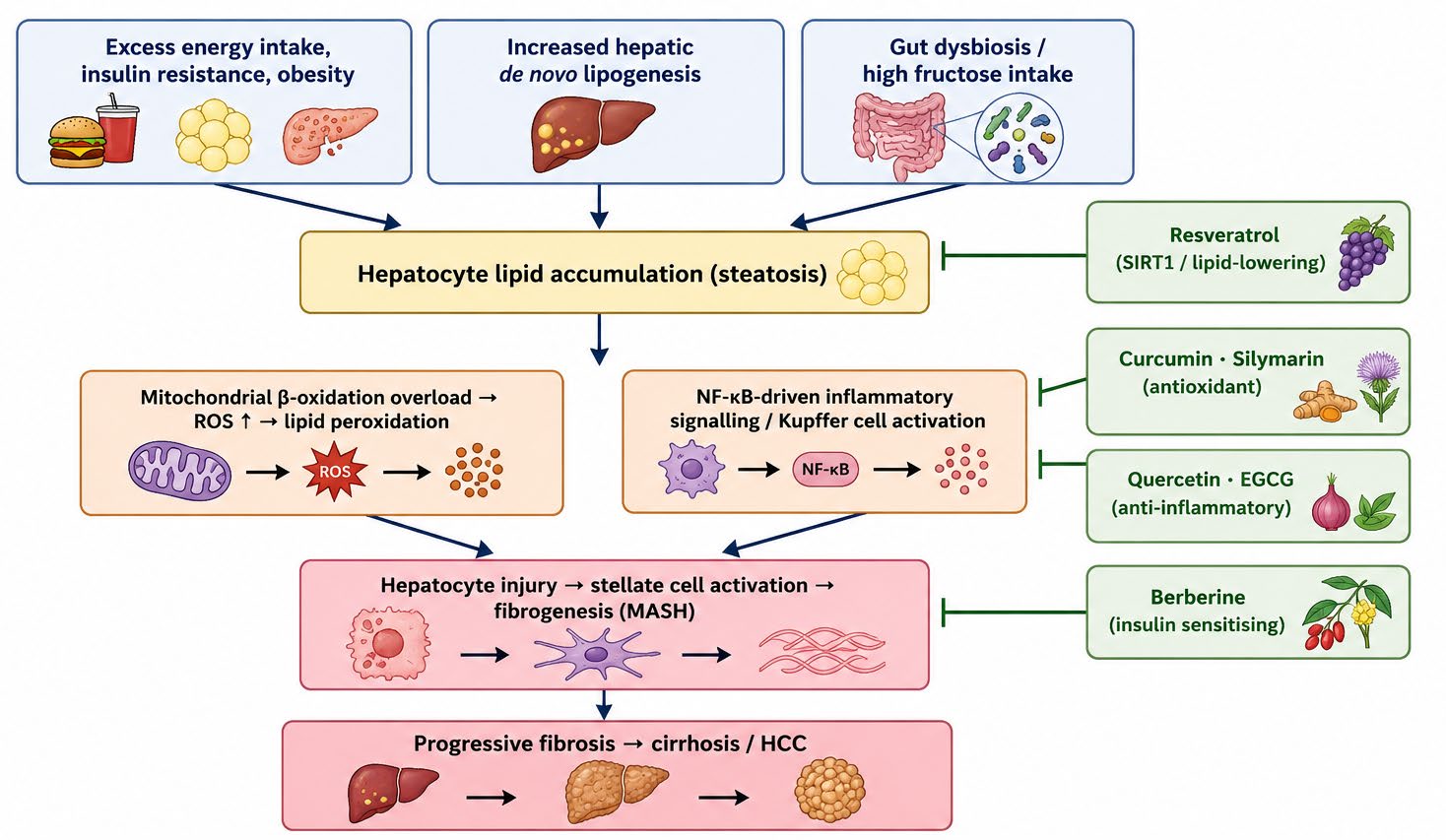
Metabolic dysfunction-associated steatotic liver disease (MASLD), formerly known as non-alcoholic fatty liver disease (NAFLD), is now the most common chronic liver disorder worldwide, affecting an estimated one-third of the global adult population and closely tracking the parallel epidemics of obesity, insulin resistance, and type 2 diabetes. Although resmetirom, a thyroid hormone receptor-β agonist, became the first agent approved for metabolic dysfunction-associated steatohepatitis (MASH) with fibrosis in March 2024, this milestone benefits only a narrowly defined, histologically or fibrosis-stage-confirmed subgroup, leaving the overwhelming majority of MASLD patients without an approved pharmacological option. This gap has sustained three decades of clinical interest in plant-derived phytochemicals curcumin, resveratrol, silymarin, quercetin, berberine, green tea catechins, and naringenin foremost among them as low-cost, generally well-tolerated adjuncts capable of modulating the oxidative stress, chronic low-grade inflammation, insulin resistance, and dysregulated lipid metabolism that together drive MASLD from simple steatosis toward steatohepatitis and fibrosis. This review synthesises randomised-controlled-trial and meta-analytic evidence for these compounds; situates that evidence within the multiple-hit pathophysiological framework and the specific molecular pathways Nrf2/Keap1, AMPK/SIRT1, NF-κB/TLR4, and transforming growth factor-β-driven stellate cell activation that phytochemicals are proposed to modulate; examines the persistent oral bioavailability barrier that constrains translational impact; evaluates nanoemulsion, liposomal, phytosomal, and polymeric nanoparticle delivery platforms designed to overcome that barrier; reviews the safety and herb-induced liver injury literature relevant to long-term supplementation; and outlines priority directions standardised formulations, biopsy- or elastography-confirmed endpoints, rational combination regimens, and stratified trial designs required to move phytochemical therapeutics from adjunctive supplementation toward evidence-based components of MASLD management.
Downloads
References