Comparative Phytochemical Profiling, Solvent Fractionation and In Vitro Anti-Arthritic Potential of Rumex hastatus D. Don
Keywords:
- Rumex hastatus; phytochemical screening; flavonoids; phenolics; protein denaturation; proteinase inhibition; lipoxygenase; anti-arthritic activity
Abstract
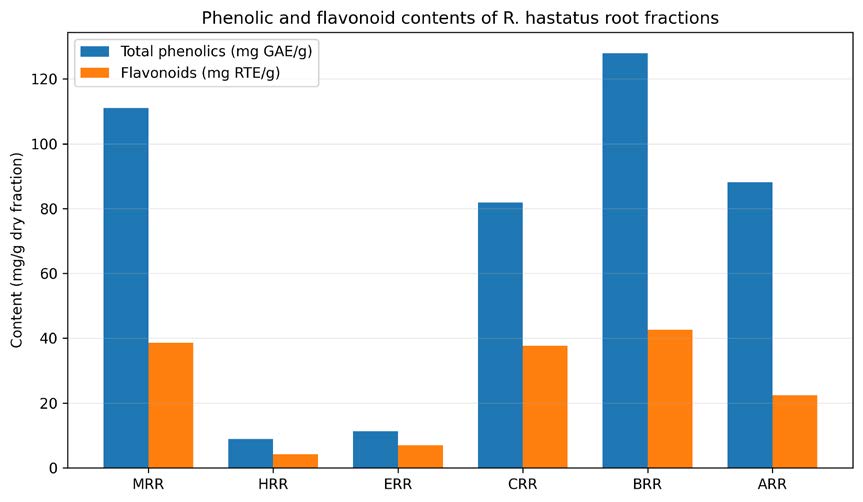
Background: Rumex hastatus D. Don. is a medicinal species of the family Polygonaceae. The present work comparatively examined successive leaf and root extracts to identify phytochemically rich preparations and to characterize their in vitro anti-arthritic potential without using the acute-toxicity or in vivo paw-edema datasets reported separately.Methods: Leaf and root material was successively extracted with hexane, chloroform, methanol and water. Extract yield and qualitative phytochemical profiles were assessed. Total flavonoid and total phenolic contents were quantified. In vitro anti-arthritic/anti-inflammatory activity was evaluated over 50–250 µg/mL using protein-denaturation assays, proteinase inhibition and lipoxygenase inhibition, with diclofenac sodium or indomethacin used as reference standards as applicable.Results: Methanol produced the highest extract yield for both leaves (7.73%) and roots (6.67%). Methanolic extracts also showed the greatest total flavonoid content (77.13±0.821 mg/g in leaves; 71.92±0.352 mg/g in roots) and total phenolic content (60.51±0.156 and 57.64±0.178 mg/g, respectively). At 250 µg/mL, methanolic leaf extract inhibited bovine-albumin denaturation by 91.33±1.17%, egg-albumin denaturation by 81.33±1.15%, proteinase activity by 81.81±1.13%, and lipoxygenase activity by 91.67±1.18%. In most assays, the activity followed the general order methanol > water > chloroform > hexane, and leaf extracts showed stronger activity than corresponding root extracts. Conclusion: The methanolic leaf extract of R. hastatus showed the most consistent phytochemical enrichment and in vitro anti-arthritic activity among the tested extracts. These findings provide a rational basis for bioactivity-guided fractionation and chemical characterization of the active constituents.
Downloads
References