Medicinal Plants as Emerging Therapeutics for Dyslipidemia and Cardiometabolic Disorders: Pharmacological and Translational Perspectives
Keywords:
- Medicinal Plants; Dyslipidemia; Cardiometabolic Disorders; Phytotherapy; Berberine; Curcumin; Network Pharmacology; Molecular Docking; Nutraceuticals; Lipid-Lowering
Abstract
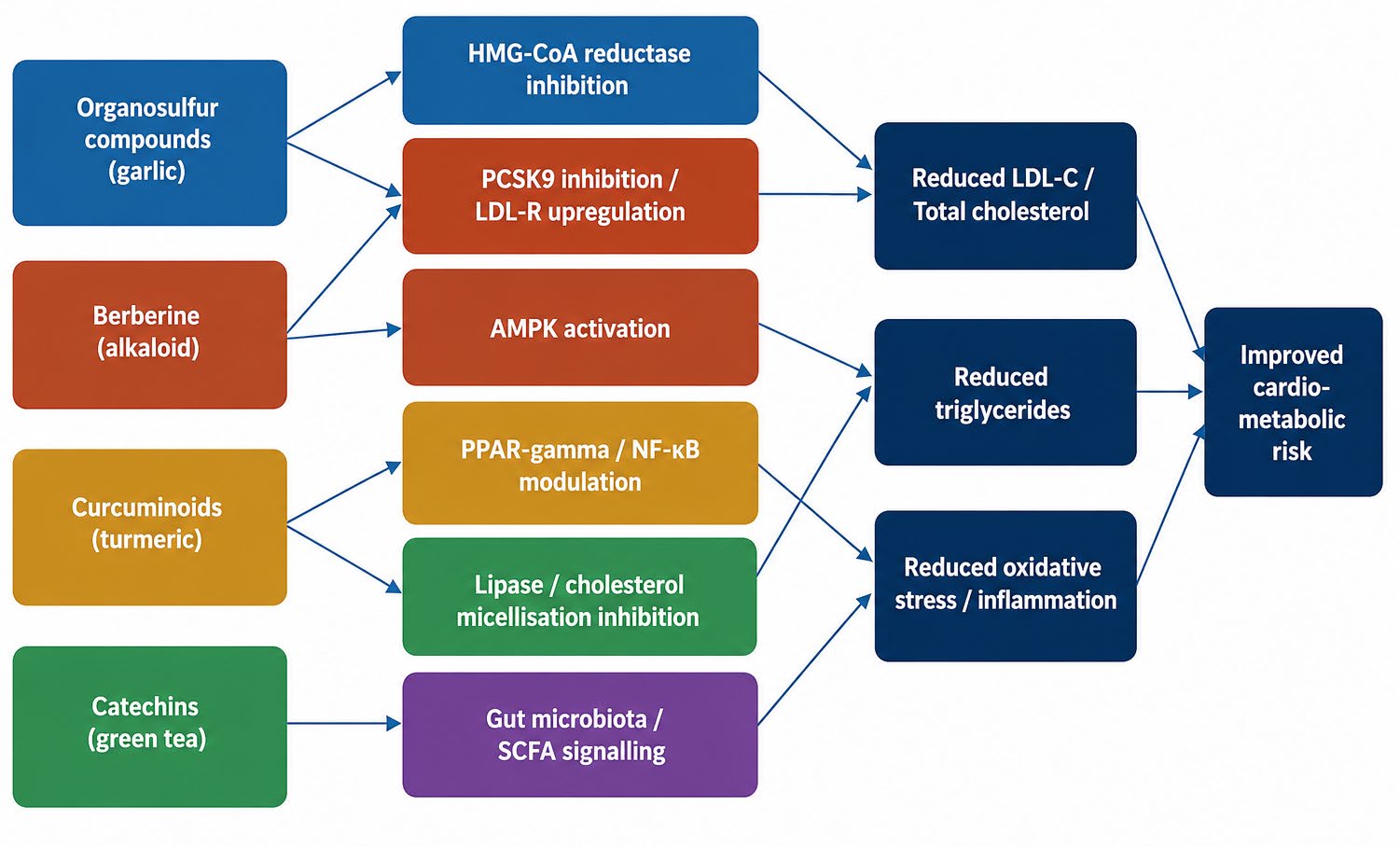
Dyslipidemia and its associated cardiometabolic disorders-including atherosclerosis, insulin resistance, non-alcoholic fatty liver disease, and metabolic syndrome-remain leading contributors to global cardiovascular morbidity and mortality despite the widespread availability of effective synthetic lipid-lowering agents such as statins, fibrates, and PCSK9 inhibitors. Long-term tolerability concerns, incomplete residual risk reduction, and variable patient adherence have sustained strong interest in medicinal plants and their bioactive phytoconstituents as complementary or alternative therapeutic strategies. This review synthesises current pharmacological and translational evidence on medicinal plants for dyslipidemia and cardiometabolic disorders, with an emphasis on mechanism-based classification of lipid-modulating phytochemicals, including organosulfur compounds from Allium species, the isoquinoline alkaloid berberine, curcuminoids from Curcuma longa, catechins from Camellia sinensis, and anthocyanins from Hibiscus sabdariffa. We examine the principal molecular mechanisms through which these compounds modulate lipid metabolism, including hepatic LDL-receptor upregulation, PCSK9 inhibition, AMPK activation, HMG-CoA reductase modulation, pancreatic lipase and cholesterol micellisation inhibition, and gut microbiota-mediated short-chain fatty acid and bile acid signalling. Clinical trial and meta-analytic evidence for each major plant-derived intervention is critically appraised, alongside the growing role of network pharmacology, molecular docking, and machine-learning-augmented computational pharmacology in accelerating the identification and mechanistic validation of multi-target phytotherapeutic candidates. We conclude by addressing the translational, safety, standardisation, and regulatory challenges that continue to separate promising preclinical and clinical phytopharmacological findings from routine integration into evidence-based cardiometabolic care, and outline future directions for this rapidly evolving field.
Downloads
References