Nanocarrier-Mediated Delivery of Phytochemicals: Advances, Challenges, and Therapeutic Applications
Keywords:
- phytopharmacology, bioactive phytochemicals, nanocarriers, lipid nanoparticles, polymeric nanoparticles, controlled release, targeted delivery,
- phytopharmacology
Abstract
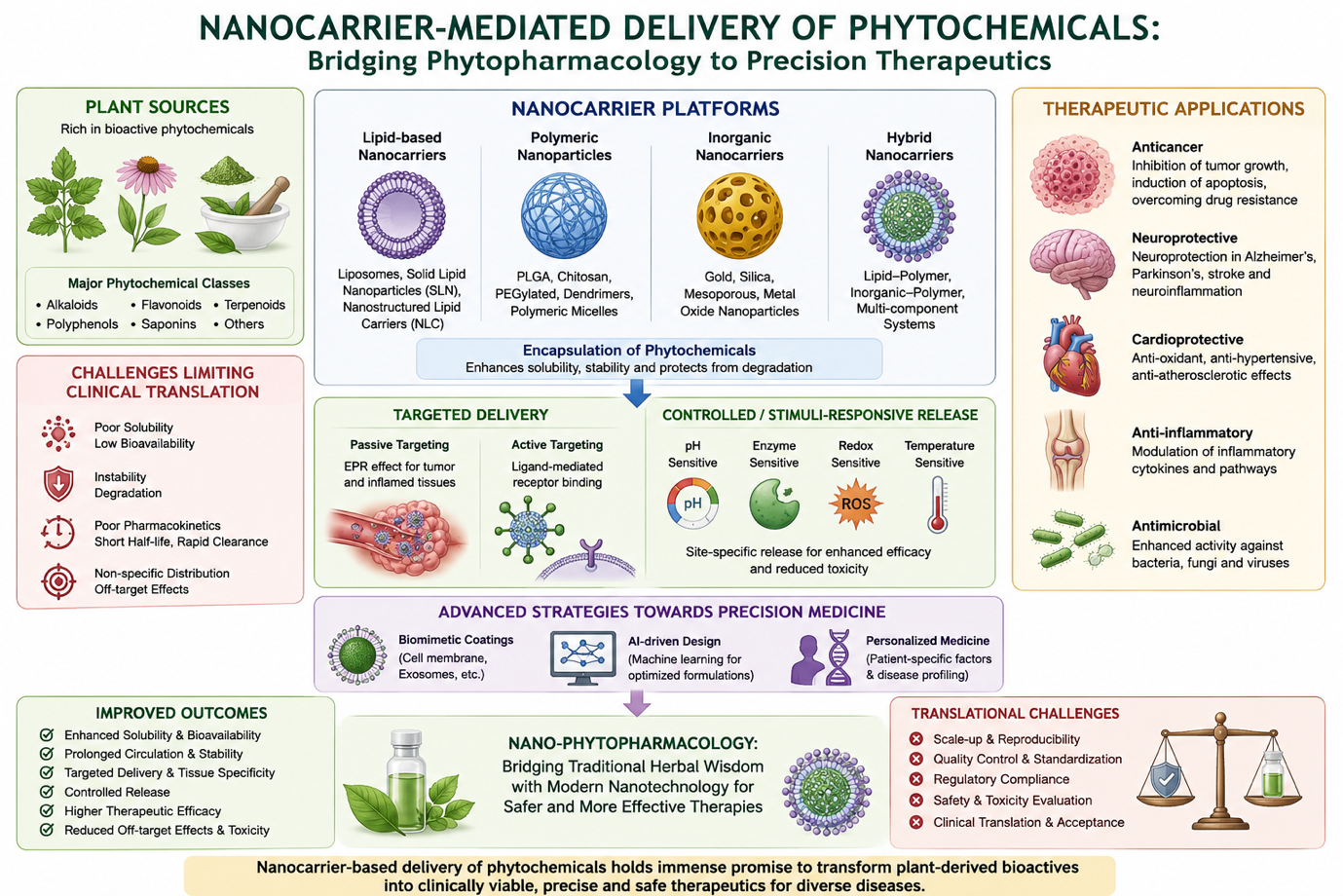
Phytopharmacology studies the bioactive compounds from plants of various therapeutic potentials, namely anticancer, neuroprotective on cardiovascular system, anti-inflammatory and antimicrobial. While promising, many phytochemicals have limited clinical translation due to poor solubility leading to low bioavailability, instability, and suboptimal pharmacokinetics. Nanotechnology-based delivery systems gain traction as transformative solutions that improve solubility, stability, targeted delivery, and control over the release of phytochemicals (lipid-based, polymeric and inorganic nanocarriers; hybrid nanocarriers). Nanocarriers can be designed for both passive and active targeting so that they cause more bioavailability, tissue specificity, and therapeutic efficacy with fewer off-target effects. These platforms are also further refined towards personalized medicine through advanced strategies, such as stimuli-responsive release, biomimetic coatings and AI-driven design. This inter-disciplinary cooperation is critical to address challenges on scale-up, reproducibility, regulatory compliance and safety. Although they employ classical components of phytochemistry, the ongoing research in nanocarrier design will connect bridging traditional herbal medications with novel precise therapies to develop new formulations and drug systems based on natural compounds with higher safety and efficacy.
Downloads
References